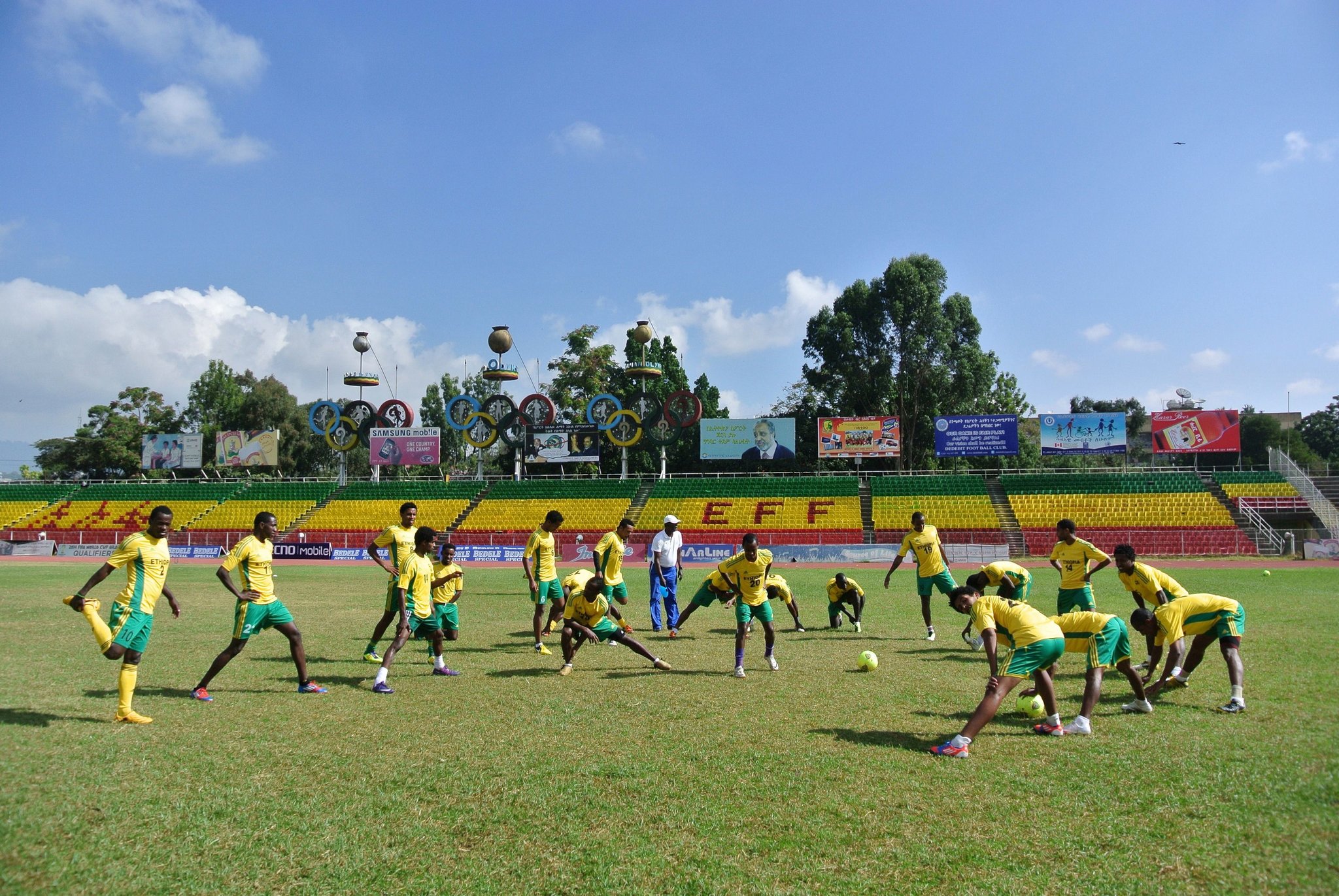
Ethiopia football talent often starts not in a major academy, but on local fields, school pitches, and in community games. That is where a young player gets the first real touches, learns to handle the tempo, and understands something simple early on: talent alone is not enough. Moving into club football takes training, discipline, visibility, and people who help you stay on the path after the first setbacks.
The country has a football foundation, not just a fresh wave of interest in the game. According to CAF, the Ethiopian Football Federation was founded in 1943, joined FIFA in 1952, and became part of CAF in 1957. Young fans who follow the game online can watch live action through 888 football live and see how local names gradually move closer to bigger stages.
Local Fields Are Still the First Step
Ethiopia football players usually begin in the places where football is simply available. That may be a school pitch, an open field, a courtyard, or a neighborhood game after class. The format is simple, but useful: plenty of touches, quick decisions, and constant competition for the ball.
For ethiopia youth football players, these matches build the first real skills. They learn to receive under pressure, find space, listen to older players, and read the tempo of the game. This is also where the community notices strong youth players for the first time.
But local football does not solve everything. Without structured training, progress hits a ceiling quickly. A player may have speed, character, and a clean strike, but without a coach, a routine, and regular matches, the climb becomes much longer.
Academies Turn Raw Skill Into Routine
football academies Ethiopia matter not because they are a magic door into the professional game. Their real value is simpler: an academy turns raw ability into a repeatable training process. A young player gets a schedule, a coach, match discipline, and regular feedback.
There are private examples of that structure in Addis Ababa. Sion Football Academy describes its work through training, mentorship, and talent development, while Dreamland Football Academy points to year-round football activities for youth aged 9 to 17 and more than 100 participants per year. That does not prove the system already covers the whole country. It does show what the route can look like from street football to more structured preparation.
- Technical training improves first touch, passing, shooting, and ball control.
- Match discipline teaches positioning, pressing, and timing in real games.
- Physical routine develops speed, stamina, and recovery habits.
- Coach feedback helps correct mistakes before they become habits.
That is how football training ethiopia gives young players not a promise, but a working base for development.
What Young Players Need to Move Up
The search phrase how to become football player Ethiopia cannot be answered with “train hard” and leave it there. It sounds energetic, but it is not especially useful.
Progress depends on several things at once. Talent helps a player get started, but it does not replace routine, competitive matches, or the people who are in a position to notice improvement. That is where Ethiopia football development becomes a practical subject rather than a vague slogan.
| Growth factor | Why it matters |
| Regular training | Builds habits that hold up under pressure |
| Competitive matches | Shows decision-making against real opponents |
| Coach visibility | Helps strong players get noticed earlier |
| Fitness work | Reduces the gap between youth and senior football |
| Family and community support | Keeps the journey stable during slower periods |
The National Team Dream Needs More Than Talent
The dream of the national team makes sense. For many players, Ethiopia national team players look like proof that the path from local fields can reach the international game. But there is a long distance between one strong match and a call-up.
A player needs club minutes, stable coaching, physical readiness, and exposure. One bright moment is not enough. Ethiopia football talent has to prove its level again and again, or the future stays exactly where most football dreams stay: in theory.
According to FIFA, as of 1 April 2026, Ethiopia’s men’s national team sits 144th in the rankings, while its highest historical ranking was 85th. That is not a verdict. It does show clearly that development needs to be systematic rather than dependent on a handful of strong players.
Where the System Still Loses Players
Ethiopia football development runs into more than a talent issue. A common weakness is the uneven pathway between school football, local clubs, academy training, and senior level. Some players reach a strong environment early. Others go too long without proper training.
Not every young player has access to structured preparation. Scouting between regions can also be uneven, which means promising players do not always get the visibility they need.
This is where football academies Ethiopia can help, but only as part of a wider system. If academies, clubs, and schools are not connected, opportunity becomes random. And without competitive matches, even strong local talent starts to lose momentum.