Key Takeaways
- GPU selection has a significant impact on deep learning training speeds.
- Memory bandwidth, storage types, and network connectivity also impact overall efficiency.
- A balance between performance and cost is crucial for both short-term success and long-term scalability.
- Energy efficiency and thermal management remain crucial in maintaining optimal system performance.
The rapid advancement of artificial intelligence has placed increasing demands on computing infrastructure, especially in deep learning applications. As models grow more complex and datasets expand, the choice of workstation components plays a vital role in determining how efficiently a system can process information. Hardware factors such as CPU power, memory capacity, and storage type directly influence how fast and effectively algorithms can learn, adapt, and deliver results. A well-balanced setup ensures that processing resources are not only powerful but also optimized for the high-intensity workloads required in machine learning environments.
Modern AI development often relies on parallel computing to handle the massive volume of data involved in training sophisticated neural networks. This is where GPU-accelerated model training has become indispensable, offering faster computation and improved scalability compared to traditional CPU-based setups. By distributing tasks across thousands of smaller cores, GPUs drastically reduce training time while maintaining accuracy and stability. The automation wave extends from on-premises frameworks to the cloud, enabling seamless multi-cloud workload management and allowing companies to maintain consistency while scaling operations.
Understanding the Role of GPUs in Deep Learning
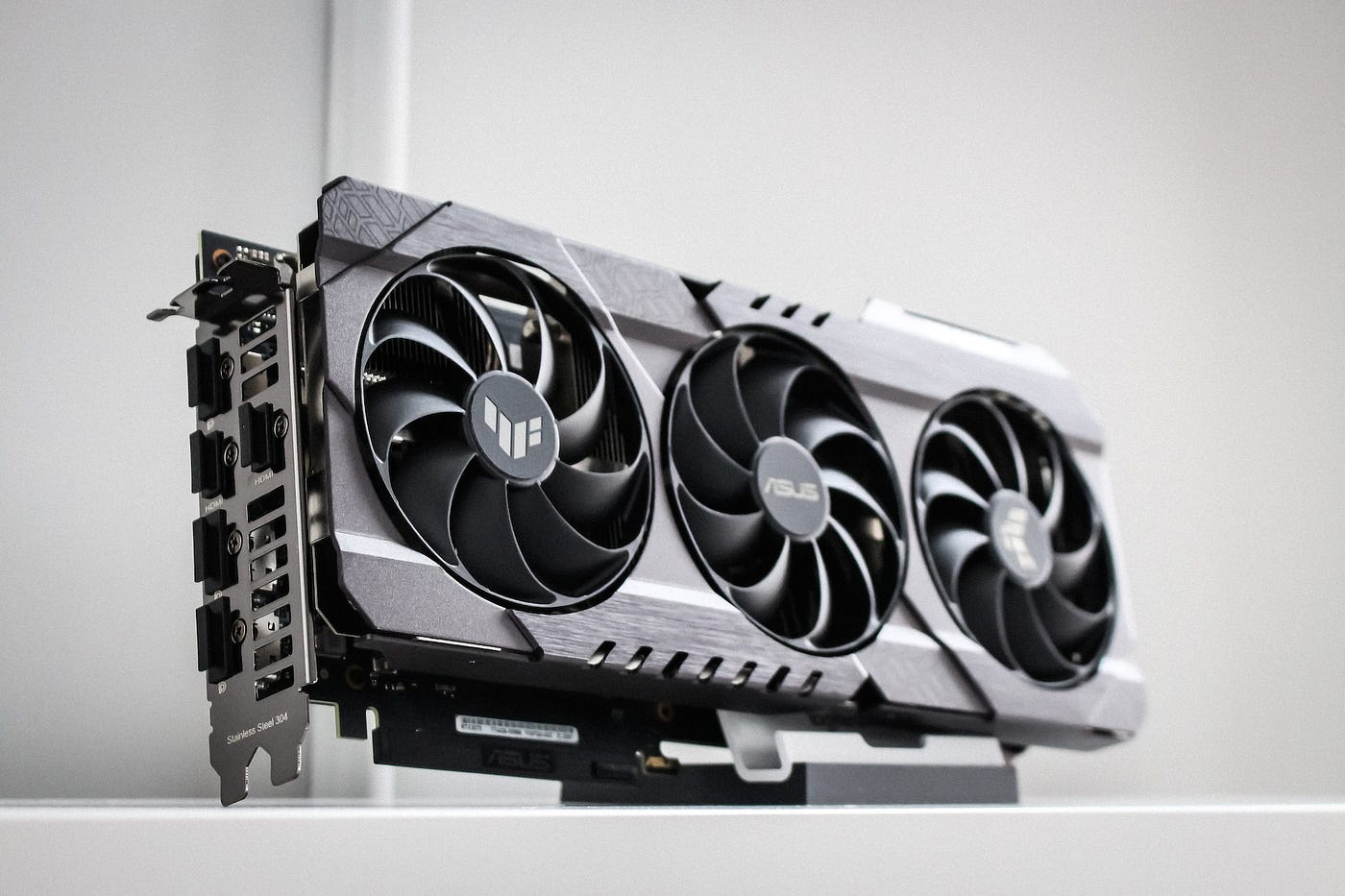
At the heart of most modern deep learning workstations are Graphics Processing Units (GPUs). Their architecture enables the simultaneous execution of thousands of lightweight threads, making them ideal for the massive parallel matrix computations in neural networks. A high-quality GPU can convert drawn-out model training from a multi-week ordeal to an overnight task. Popular frameworks such as TensorFlow and PyTorch are optimized for GPU utilization, further emphasizing their importance for productivity and experimentation. In contrast, standard Central Processing Units (CPUs) can’t match GPUs’ throughput when handling large-scale model training. For example, training a convolutional neural network on a modern GPU can be dozens of times faster than using a CPU alone. Advanced GPUs feature growing memory capacities and bandwidth, supporting larger models and bigger datasets, meaning you can push project boundaries without being hardware-constrained.
Memory Bandwidth and Its Impact on Training Speed
The ability to seamlessly transfer data between memory and processing units is crucial for achieving high efficiency in deep learning. GPUs typically offer significantly greater memory bandwidth than CPUs, enabling the processing of larger minibatches and more complex models without data transfer bottlenecks. High bandwidth ensures GPUs are never left idle while waiting for the next batch. For data-hungry applications like natural language processing or computer vision, boosting memory performance can be just as critical as investing in additional GPU cores. Additionally, fast on-board memory, such as GDDR6X or HBM, significantly accelerates model convergence by enabling smoother streaming of inputs and gradients during training. For deep learning researchers working with multi-terabyte datasets or huge model architectures, having sufficient memory bandwidth can make the difference between models that train efficiently and those that are hampered by constant I/O stalls.
Storage Solutions: SSDs vs. HDDs
Training state-of-the-art machine learning models demands rapid access to massive training datasets. Solid State Drives (SSDs), with significantly faster read/write speeds compared to traditional Hard Disk Drives (HDDs), virtually eliminate data-loading lags that previously slowed pipeline efficiency. SSDs simplify preprocessing and caching, maintaining a steady flow of data to high-speed memory without bottlenecking the system during training or inference. This seamless data access is especially noticeable in high-frequency, distributed training jobs. Modern NVMe SSDs, which offer stunning bandwidth, allow for near-instantaneous loading of gigabytes of data, supporting advanced data augmentation and shuffling techniques that further enhance model performance. Conversely, relying on legacy HDDs—even with substantial caching—can severely limit throughput, resulting in frustrating downtime and reduced pipeline efficiency.
Networking Considerations for Distributed Training
For organizations scaling deep learning workloads across clusters or in hybrid cloud environments, robust networking is essential. High-speed network fabric, such as InfiniBand or advanced Ethernet standards, allows rapid parameter synchronization across nodes. Poor networking can result in substantial delays, especially when working with large, distributed datasets or multi-GPU clusters. An efficient networking infrastructure minimizes idle time, allowing each GPU or node to work in tandem for the fastest possible convergence of model training. In practice, the difference in using 1 GbE versus 100 GbE or InfiniBand can represent hours shaved off distributed tasks, ensuring faster researcher feedback and more responsive scaling. Optimized network topologies that offer low latency and high throughput are essential for maximizing computational resources and maintaining stable, predictable training durations across distributed systems.
Energy Efficiency and Cooling Requirements
High-performance model training hardware generates significant heat and consumes large amounts of power. Efficient thermal management doesn’t just protect components from failure; it also prevents processor throttling, which can silently degrade system performance over long training sessions. Liquid cooling, intelligent airflow design, and energy-efficient GPUs are all strategies used to mitigate operational costs and extend system longevity, ensuring peak performance even during intensive workloads. Energy efficiency is becoming increasingly important as models grow larger and hardware becomes denser. By minimizing the electrical and thermal footprint of your compute nodes, you reduce direct electricity costs and maximize output per watt. For institutions running multiple training jobs or maintaining large clusters, these optimizations can yield substantial operating cost reductions while protecting hardware investments in the long run.
Balancing Cost and Performance
Choosing workstation hardware is a balancing act between budget and maximizing performance for your specific workloads. Investing wisely in components such as multiple GPUs, high-speed memory, and SSD storage can yield dramatic time savings. For example, transitioning from a single consumer-grade GPU to a dedicated server workstation equipped with multiple professional GPUs can reduce model training time by sixfold or more, amplifying productivity while recouping initial hardware investments through ongoing efficiency gains. For smaller organizations or startups, it’s essential to map hardware spend directly to immediate needs, focusing on scalable architectures and modular upgrades to avoid overspending on features not yet required.
Future-Proofing Your Workstation
To future-proof workstations for deep learning, it is crucial to choose modular components that accommodate upcoming GPU generations and faster memory standards. This adaptability ensures that teams can efficiently manage growing datasets and benefit from advanced connectivity. Key considerations include ample PCIe slots, compatibility with new memory technologies, and scalable storage solutions. By planning for hardware extensibility, organizations can extend the lifespan of their workstations, saving time and money. Ultimately, investing in advanced hardware not only speeds up projects but also positions teams to excel in the evolving landscape of AI innovation.
Final Insights
Building an optimized deep learning workstation requires more than just high-end components—it demands a thoughtful balance between performance, scalability, and cost. Each hardware choice, from GPU architecture to cooling systems, directly shapes model training efficiency and long-term operational stability. As AI workloads continue to evolve, adaptable infrastructure becomes an invaluable asset. Prioritizing energy efficiency, upgrade potential, and balanced configurations ensures that systems remain both competitive and sustainable. By aligning hardware strategy with research goals, teams can achieve faster results, streamline experimentation, and stay ready for the next generation of machine learning advancements.