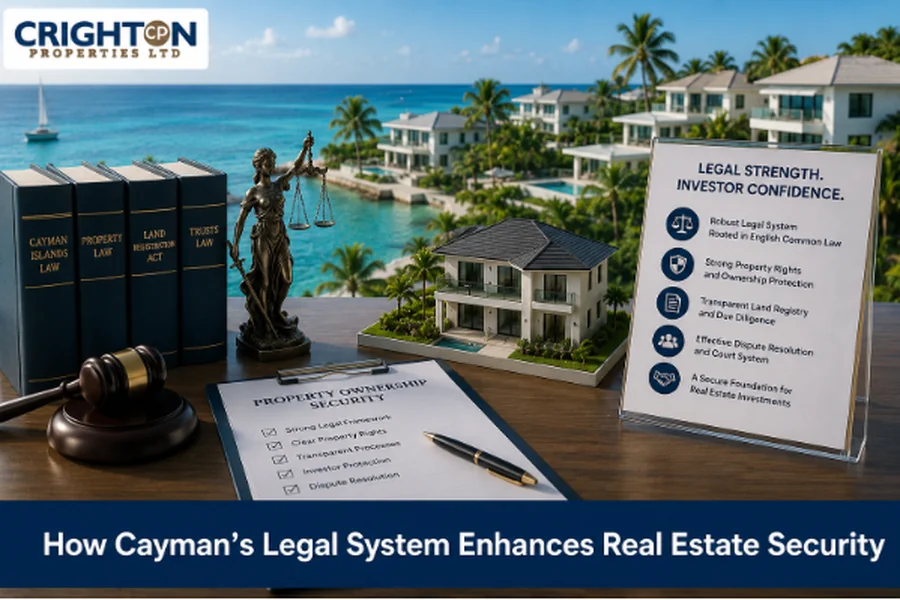
Buying property involves more than agreeing on a price and completing the paperwork. Buyers also need confidence that ownership can be verified, existing interests in the land can be identified, and legal remedies exist if something goes wrong. Cayman’s registered land system provides that structure through formal land records, legislation, and an established court system.
Quick Answer
Cayman’s legal system helps protect real estate buyers through registered property titles, searchable Land Registry records, statutory rules governing transfers and competing interests, and legal remedies for certain registry errors. Buyers can verify ownership, registered charges, easements, and other recorded interests before completing a purchase. These protections provide a high degree of certainty, but proper legal due diligence is still necessary.
Property Ownership Starts With the Land Register
Cayman operates a registered land system under the Registered Land Act. When a person is registered as proprietor with absolute title, the law establishes their ownership subject to interests that legally affect the parcel.
For buyers reviewing Properties for sale in the Cayman Islands, this means ownership does not depend solely on a collection of historic deeds passed from one owner to another. The Land Register provides an official record identifying the registered proprietor and interests recorded against the land. The system helps make ownership easier to verify before a transaction reaches completion.
Buyers Can Check More Than Who Owns the Property
The Land Registry, administered through the Cayman Islands Lands & Survey Department, maintains registers, maps, filed instruments, and plans relating to land.
Under the Registered Land Act, people can apply to inspect Registry records and obtain official searches or certified copies. Depending on the property, due diligence can reveal registered mortgages or charges, leases, easements, restrictions, and other recorded interests.
The Act also provides a useful protection during certain transactions. An official search made with the registered proprietor’s consent can create a 14-day period affecting the priority of later registrations. This can help protect a buyer’s transaction while the relevant instrument is being presented for registration.
What Does Government-Guaranteed Title Mean?
Title insurance is generally not needed in Cayman because Government guarantees title. At the same time, that buyers have an attorney investigate the title and check for liens or other concerns.
The legislation gives this protection a more precise basis. The Registered Land Act contains procedures for correcting certain errors in the register and provides Government indemnity in qualifying cases where someone suffers loss because of specified registry errors, omissions, or rectification.
That does not mean title problems are impossible. Certain interests can affect land even when they are not entered on the register. This is one reason a registry search should be accompanied by proper legal review rather than treated as the entire due-diligence process.
Strata Ownership Has Its Own Legal Structure
For condominium buyers in areas such as Seven Mile Beach and George Town, Cayman’s Strata Titles Registration Act provides another layer of structure.
Individual strata lots can be separately registered, while owners also hold interests in common property. The strata corporation manages shared matters such as common property, insurance, maintenance, and applicable bylaws.
Before buying a strata property, purchasers should review the title alongside strata financial records, bylaws, fees, insurance arrangements, and any planned assessments or major works.
There Is an Established Route for Property Disputes
Cayman’s courts operate under the Constitution, local legislation, and established common-law principles. The Grand Court has unlimited civil jurisdiction and can hear complex disputes involving substantial assets. Appeals can proceed to the Cayman Islands Court of Appeal, with the Judicial Committee of the Privy Council serving as the final appellate court for Cayman.
For property owners, this provides a defined judicial route if disputes arise over ownership, contracts, charges, or other legal rights.
What Should Buyers Check Before Completion?
Even with a formal registration system, buyers should confirm:
registered ownership and charges;
easements and restrictions;
property boundaries and surveys where relevant;
planning and approved use;
mortgage or other secured interests;
strata records for condominium purchases.
A Cayman real estate company can help buyers identify properties and understand the transaction process, while an attorney should handle the legal review and advise on title, contracts, and property-specific risks.
Final Thoughts
Cayman’s registered title system, accessible property records, statutory protections, and established courts give buyers a clear legal framework for owning real estate.
The system reduces uncertainty, but it does not replace due diligence. The strongest property purchase combines the protections available under Cayman law with careful review of the individual title, land, approvals, and contractual terms before completion.