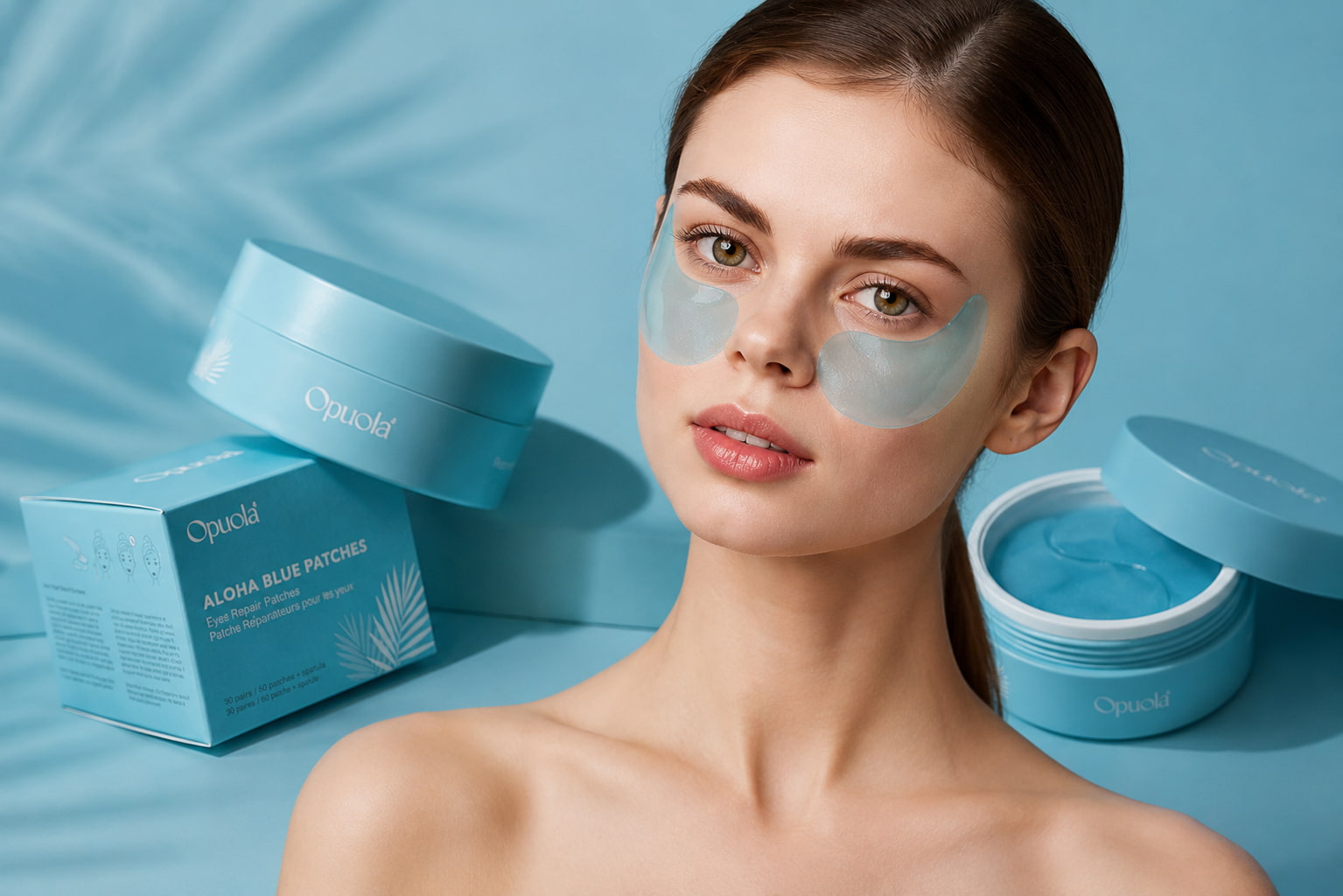
A hydrogel eye patch used to be a spa-menu item, or something you read about on K-beauty forums. Now the jars sit in any American drugstore, beside the sheet masks, and they are now the standard answer to a short night. They are easy to use, but the material has its quirks, and most complaints online trace back to the same few habits: skin that was not quite dry, one left on far too long, a jar stored on a sunny shelf. None of that is obvious the first time you open a pack, so here is what the gel actually is, how to place it, and the small rules that decide whether those fifteen minutes were worth it.
What a hydrogel eye patch actually is
Opuola Aloha Blue Patches, like most in this category, rely on a water-based gel matrix holding a serum in suspension. The matrix is usually agar, gelatin or carrageenan, none of them active. Unlike a cotton pad, a hydrogel eye patch does not just sit on the skin. It shapes itself to the eye socket and forms a temporary seal, which slows evaporation. That is why it feels cool so long, and why the serum keeps working instead of drying off in minutes. Most formulas lean on humectants like glycerin or hyaluronic acid, plus caffeine or niacinamide. The gel is a delivery system more than an ingredient, which is why two products that look identical can behave very differently.
How to apply a hydrogel eye patch
A hydrogel eye patch grips best on skin that is clean and properly dry. Leftover makeup, sunscreen or facial oil will stop it sticking, and one sliding down your cheek does nothing for you. Lift each one out with the little spatula, or clean hands, because the gel tears easily. Lay the wider curve along the bone under the eye, below the lash line, never the lid. Point the narrow tip inward for shadows, outward if the fine lines at the corner bother you more. Smooth a fingertip over it to push out trapped air, then leave it alone. When you peel it off, tap the leftover serum in with your ring finger. No need to rinse.
Timing, storage and a word of caution
Fifteen to twenty minutes is the window most brands settle on. Once the gel dries out it reverses and pulls water from your skin, so an hour-long session leaves the area tight rather than soft. Set a timer, and check the box, because a few formulas ask for less. A hydrogel eye patch is made for one use, because the gel loses its structure and cleanliness the moment it comes off. Keep unopened jars cool and dry, away from radiators and windowsills, since heat softens it. If your skin reacts easily, test one on your forearm first. These are cosmetics, for external use only, so keep them out of the eye and stop if you feel stinging.