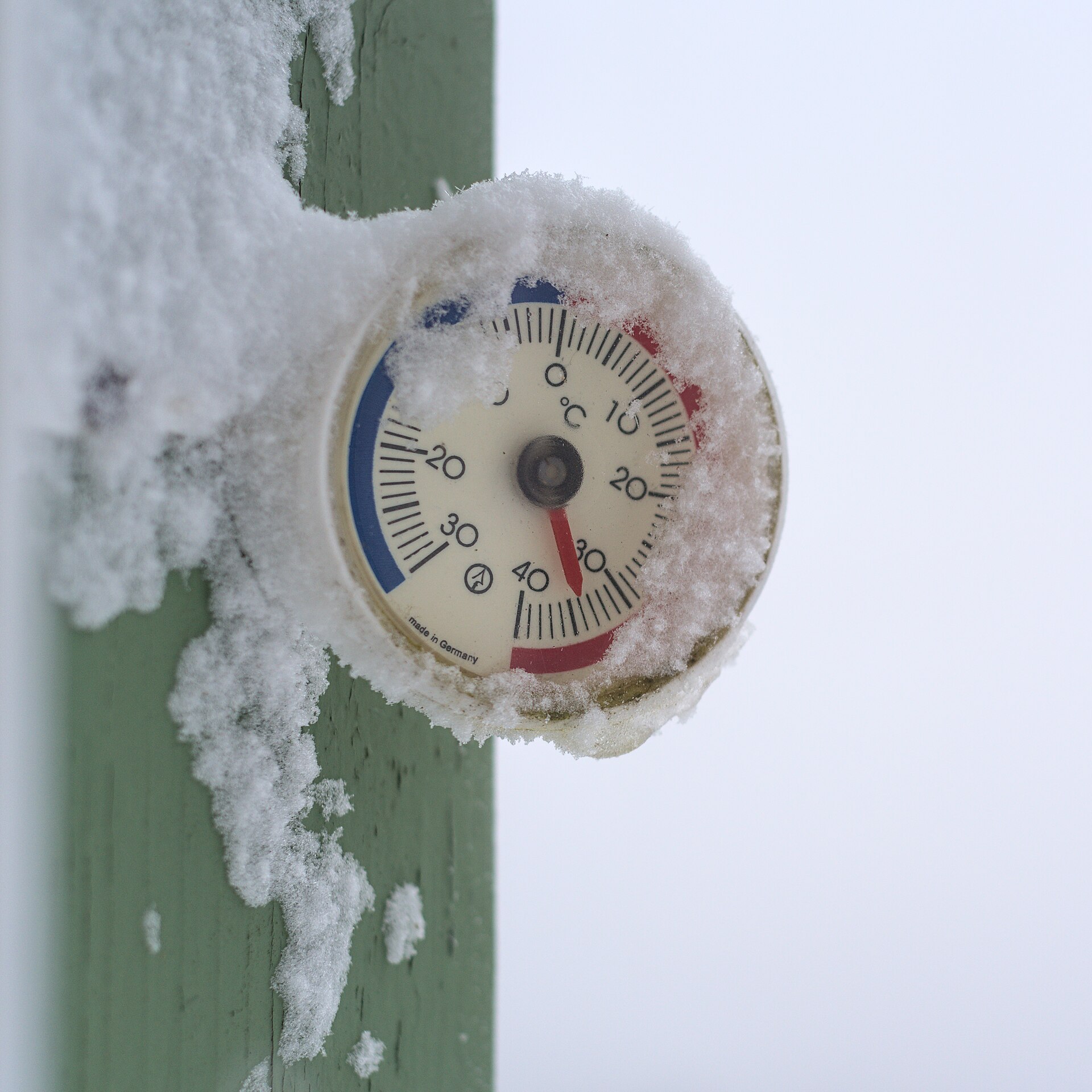
The forecast says it’ll be minus two in the morning, and you grew up with Fahrenheit. So what is -2 celsius in numbers you can feel? It’s 28.4 degrees Fahrenheit, just below the point where water freezes. Cold enough for frost on the windshield, but nowhere near dangerous if you’re dressed for it.
Doing the sum
To turn Celsius into Fahrenheit, multiply by 1.8 and add 32. For this one, -2 times 1.8 gives -3.6. Add 32 and you get 28.4.
Watch the minus sign. The most common slip is to multiply 2 by 1.8, forget it was negative, and end up with 35.6. That’s the answer for plus two, and the difference matters: at 35.6°F a puddle stays wet, while at 28.4°F it can turn to ice.
On the Kelvin scale, which scientists use, -2°C is 271.15 K. You just add 273.15.
A trick for doing it in your head
Double the number and add 30. For -2, that’s -4 plus 30, or 26. It’s a couple of degrees low, but quick enough for deciding on a coat. The shortcut is spot on at 10°C and drifts the further you get from there, so don’t rely on it for an oven.
It also helps to keep a few fixed points in mind. Zero is 32°F. Ten is 50°F, twenty is 68°F and thirty is 86°F. If you remember that each Celsius degree is worth nearly two Fahrenheit ones, you can work out most of the rest.
What it feels like outside
On a still, sunny day, -2°C is crisp and quite pleasant. You’ll see your breath. A warm coat, gloves and a hat are plenty for a walk.
Wind changes things. With a breeze of around 20 kilometers an hour, it may feel more like -8°C on bare skin. Damp air and a lack of sun add to the chill, which is why two days with the same reading can seem so different.
Roads, pipes and plants
Drivers should take it seriously. Wet roads can ice over, and bridges usually freeze first because cold air passes above and below them. Black ice is hard to spot, so slow down on shaded stretches early in the morning.
House pipes rarely burst at this temperature in an insulated home, as it usually takes a harder and longer freeze. An outdoor tap is still worth covering. In the garden, tomatoes, basil and other tender plants will suffer, while kale and leeks carry on happily. A sheet thrown over the bed at dusk may save a plant or two.
Would water freeze?
Pure water freezes at 0°C under normal pressure, so yes, given time. A shallow dish left out overnight should have a skin of ice by breakfast, and a full bucket will take far longer.
Salt water is another matter. Typical seawater freezes at about -1.8°C, so -2 is right on the edge for it. Salted roads stay wet for the same reason.
It’s too warm for your freezer, though. Food is meant to be kept at -18°C, or 0°F. If yours reads -2, something’s wrong with it.
Celsius or celcius?
The word is often misspelled, because the two c sounds are the same. The correct form is Celsius, with an s in the middle and a capital C, as it’s named after Anders Celsius, a Swedish astronomer. Oddly, his original scale ran the other way round, with water boiling at 0 and freezing at 100. It was flipped soon afterward.
Older people may still say centigrade, which means the same thing in daily life. For other spellings that people mix up, compairro.com has short comparisons.
If you only keep one thing: -2°C is 28.4°F, so scrape the car and mind the pavement.